A few months ago, one of my friends unlocked his phone in front of me, and I immediately noticed something unusual. Instead of entering a fixed PIN like 1234 or 2580, he typed numbers that matched the current time displayed on his screen.
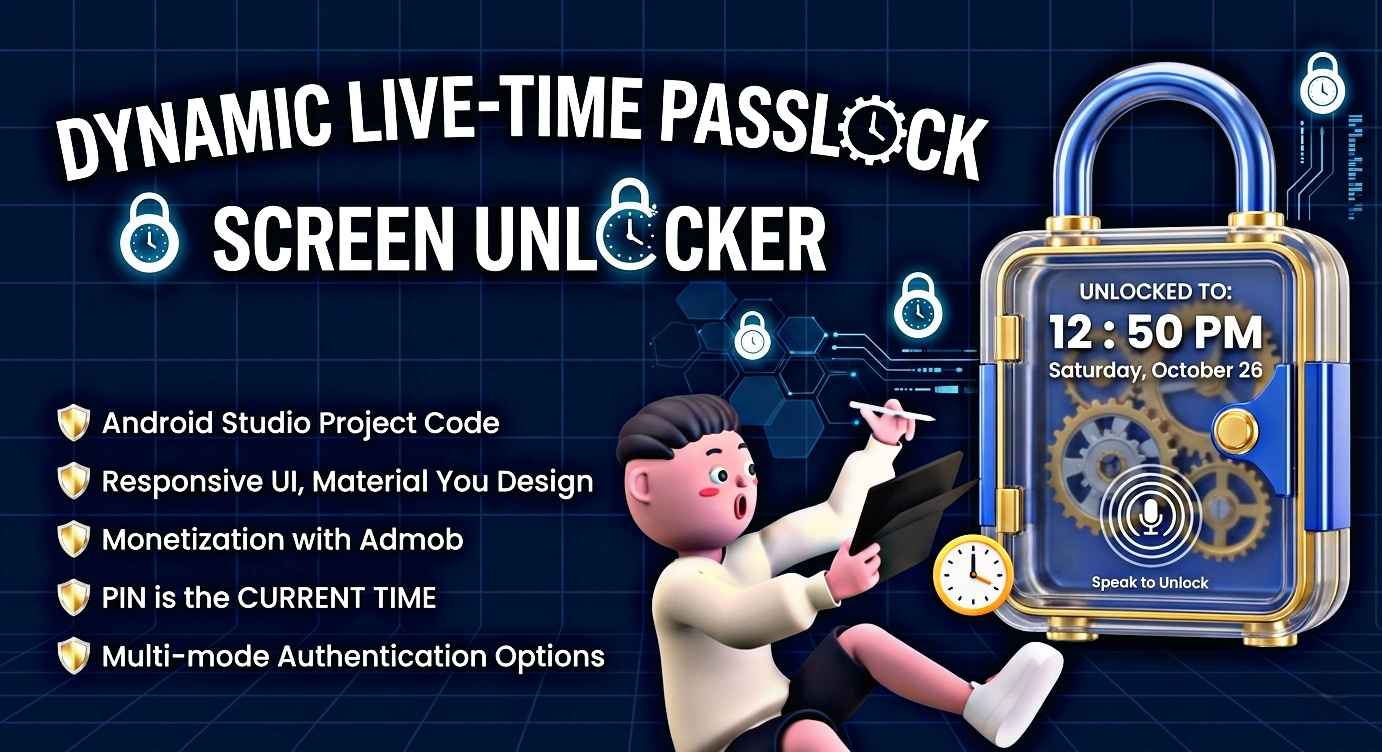
At first, I thought he was using some advanced security feature built into Android. After asking him about it, I learned that he was using a lock screen app that turns the current screen time into the unlock password.
Honestly, I thought it was just a gimmick. But after trying it myself for a couple of weeks, I realized why so many Android users like it. The password changes every minute automatically, making it harder for someone to guess or memorize your lock code.
If you’ve seen videos about “live time passwords” or “screen time lock” and wondered whether it’s actually possible in 2026, this guide will explain everything in simple terms.
What Is a Live Screen Time Password?
A live screen time password is a lock method where the current time becomes your unlock code.
For example:
- If the time is 08:45, the password becomes 0845
- If the time is 12:30, the password becomes 1230
- If the time changes to 12:31, the password also changes automatically
This means the code is never the same for very long.
Many Android users install third-party lock screen apps to achieve this effect because most phones still don’t include this feature as a built-in option.
Why People Like This Lock Method
After testing it myself, I noticed a few advantages.
It Changes Automatically
Traditional PIN codes stay the same until you manually change them.
With a live time password, the code updates every minute.
Someone who watched you unlock your phone earlier won’t necessarily know the next password.
Easy to Remember
You don’t have to memorize complicated numbers.
You simply enter the current time shown on your phone.
Feels More Secure
While it isn’t perfect security, it does create an additional layer of unpredictability compared to common PINs.
Many people use weak passwords such as:
- 1234
- 0000
- 2580
- Birth years
A changing password can be harder to guess than these common combinations.
Is It Available on All Phones?
Not exactly.
Most Android brands like:
- Samsung
- Xiaomi
- Realme
- Vivo
- Oppo
- Infinix
- Tecno
do not include a native live time password feature.
Instead, users typically rely on lock screen applications available through the Google Play Store.
The exact availability may vary depending on Android version and device compatibility.
How to Set Live Screen Time as a Mobile Password
The setup process is usually straightforward.
Step 1: Open Google Play Store
Launch the Play Store on your Android phone.
Step 2: Search for a Time Password Lock App
Search using terms like:
- Time Password Lock
- Dynamic Lock Screen
- Screen Time Password
- Time Lock App
You’ll find several apps that provide this functionality.
Always check:
- Ratings
- Reviews
- Recent updates
- Permissions requested
I learned this lesson the hard way after installing an app that was packed with ads and requested unnecessary permissions.
Step 3: Install the App
Download a reputable application with positive user feedback.
Avoid apps with very few downloads or suspicious reviews.
Step 4: Grant Required Permissions
Most lock screen apps need permissions such as:
- Display over other apps
- Accessibility access
- Lock screen control
Read each permission carefully before enabling it.
Step 5: Enable Time Password Mode
Inside the app settings, look for:
- Dynamic Password
- Current Time Password
- Live Time Lock
Turn the feature on.
Step 6: Test Before Fully Switching
This is important.
Before relying on the lock screen completely, lock and unlock your phone several times.
Make sure you understand:
- 12-hour format
- 24-hour format
- Leading zeros
A small misunderstanding can leave you temporarily locked out.
My First Mistake
The first time I tried a live time password app, I forgot that it was using 24-hour format.
At 9 PM, I entered 0900 repeatedly.
The correct password was actually 2100.
For a few minutes, I genuinely thought the app was broken.
After checking the settings, everything made sense.
This taught me to always verify the time format before depending on the feature.
Does It Really Improve Security?
The answer is both yes and no.
Where It Helps
It protects against:
- Simple password guessing
- Repeated observation of the same PIN
- Basic shoulder surfing attempts
Since the password changes constantly, someone cannot simply remember yesterday’s code.
Where It Doesn’t Help
If someone knows you’re using a time-based password and can see the current time, they may still be able to unlock the device.
For this reason, many security experts still recommend:
- Fingerprint unlock
- Face unlock
- Strong PIN codes
- Two-factor authentication where available
Think of live time passwords as a fun alternative lock method rather than military-grade security.
Best Situations for Using a Time Password
I found it useful in several situations.
For Secondary Phones
Many people have a spare Android device.
A live time password can add some variety without requiring memorization.
For Students
Students who frequently share phones with friends often enjoy the changing-password concept.
For Family Devices
Shared household devices can benefit from a password that updates automatically.
For Tech Enthusiasts
If you enjoy experimenting with Android customization, this feature is surprisingly entertaining.
Common Problems and Fixes
Password Not Working
Check whether the app uses:
- 12-hour time
- 24-hour time
Many login failures happen because users enter the wrong format.
Lock Screen Disappears
Some phone manufacturers aggressively close background apps.
Try:
- Removing battery restrictions
- Allowing auto-start
- Locking the app in memory
Too Many Ads
Free lock screen apps often display advertisements.
Consider upgrading to a premium version if the developer is reputable and the app performs well.
App Stops After Restart
Some devices disable accessibility permissions after a reboot.
Reopen the app and verify that required permissions remain active.
Safety Tips Before Using Any Lock Screen App
Over the years, I’ve tested dozens of Android customization apps, and one rule has saved me many headaches.
Only install apps from trusted developers.
Before installing:
- Read recent reviews
- Check update history
- Review permissions
- Avoid unknown APK sources
Also keep a backup unlock method available whenever possible.
If the app crashes or stops working, you’ll want a reliable way to regain access to your device.
Alternative Security Options in 2026
If a live time password feels too complicated, modern Android phones offer excellent alternatives.
Popular options include:
- Fingerprint unlock
- Face recognition
- Pattern lock
- Strong PIN codes
- Passkeys
- Smart Lock features
Many users combine biometric security with a backup PIN for maximum convenience.
Final Thoughts
Using the current screen time as a mobile password is one of those Android tricks that looks futuristic when you first see it. After trying it myself, I found it surprisingly fun and practical, especially for users who get bored with traditional PIN codes.
That said, it works best when you understand its limitations. A live time password can add variety and some extra unpredictability, but it shouldn’t replace good security habits.
If you decide to try it, choose a trusted app, test it carefully, and keep a backup unlock method ready. Once everything is configured correctly, you’ll have a lock screen that changes every minute and definitely grabs attention whenever someone watches you unlock your phone.